In 1635, Samuel Maverick sold all his Winnisimmet land holdings,
except the land his home and farm occupied (Admiral’s Hill), to
Richard Bellingham one of the patentees of the Massachusetts Bay
Company Charter.
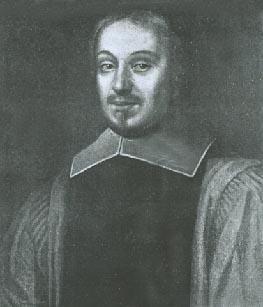
Richard Bellingham, up and coming and an extensive land owner in
Boston, was bom in Boston, Lincolnshire, England in 1592. He migrated
to Boston, Massachusetts in 1634. Bellingham lived in a town house on
Tremont Street in Boston. During the summer he spent his time in a
home believed to be near the Ferry on Marginal Street, Chelsea.
Bellingham divided his land into four huge farms after the manorial
estates in England. Each farm was leased to a tenant farmer. Each of
these farms became known by the name of the tenant fanner with the
name of the last tenant applied to four schools built in the
nineteenth century. The Smith farm eventually became the Williams
farm, the Eustis farm became the Shurtleff farm, and the Senter farm
became the Carter farm. The earliest listing of a tenant for the
largest farm was 1663 when Samuel Townsend took occupancy and in the
eighteenth century it became the Cary farm.
A large inland section of this farm was virtually wild and heavily
forested, especially around the Powderhom Hill area. In 1659, Richard
Bellingham built a house with a gambrel roof in the front and a
leanto in the rear. It covered two front rooms and an L on the upper
comer which was the style of that day. Bellingham used this as his
hunting lodge and it exists today as the original part of the
Governor Bellingharn-Cary House.
Richard Bellingham – Governor of Massachusetts
Bay Colony 1641. He was the owner of nearly all of the present City
of Chelsea to 1672.
In 1635, Richard Bellingham was elected Deputy Governor of the
Massachusetts Bay Colony. This was the first of thirteen years he
would serve in this position. In 1641, Richard Bellingham was elected
for the first of ten various years as governor. He was appointed
governor over adversary John Winthrop. Much of Bellingham’s term of
office were marked with disputes with other officials.
After his first wife’s death Bellingham married a woman betrothed to
another man, performing the ceremony himself. Bellingham was
prosecuted for a breach of law, but being a judge he refused to leave
the bench instead trying and freeing himself of all charges.
Preaching Quaker doctrines was an attack on Puritan theocratic ideas.
Quakers received cruel and ruthless treatment in Boston, yet they
insisted on sending missionaries to the area. In 1656, Anne Austin
and Mary Fisher arrived in Boston from England as Quaker
missionaries. Governor Endicott was away from Boston, Deputy Governor
Bellingham was in charge. He had the two women arrested and put in
jail. For fear that they would preach their heresies out the jail
windows he had the windows boarded up. The books the women had with
them were seized and burned. The women were kept in jail and half-starved
for five weeks when they were put on a ship sailing to the
Barbadoes. Governor Endicott stated that Bellingham was too easy; he
(Endicott) would have had them flogged. As Governor, he defended the
authority of the colonial charter against a royal commission sent
from England.
Governor Richard Bellingham died on December 7, 1672 at the age of
eighty years. Governor Bellingham left a last will and testament
leaving his whole estate for religious purposes. The will was
contested in the courts for one hundred fourteen years, the longest
case of litigation the country ever experienced. By tying up the
property it retarded the growth and development of the town. Governor
Bellingham is buried in Granary Burying Grounds in Boston. The
Governor Bellingham-Cary House is the only house in existence built
by one of the founders of the Massachusetts Bay Colony.
